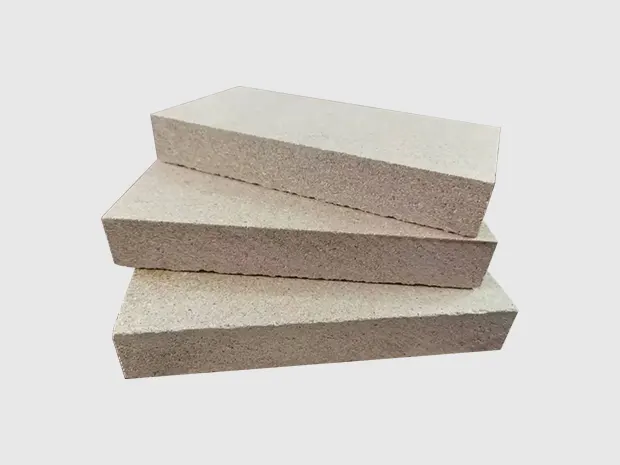
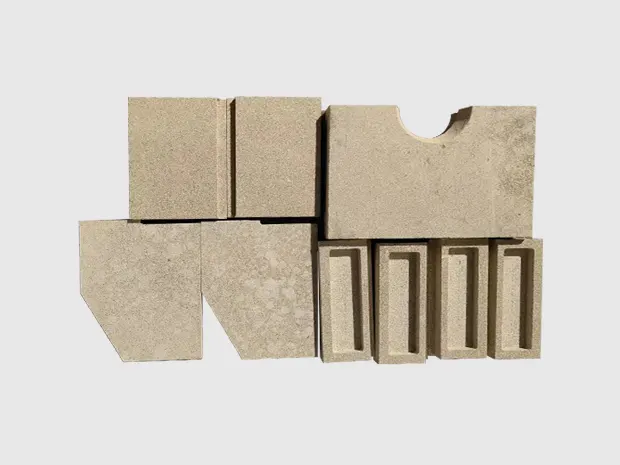
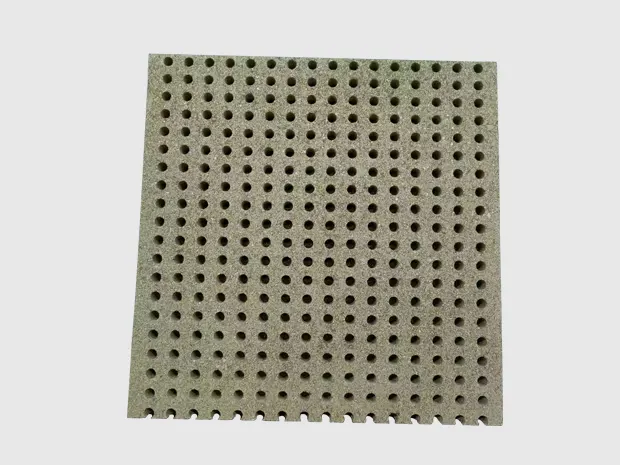
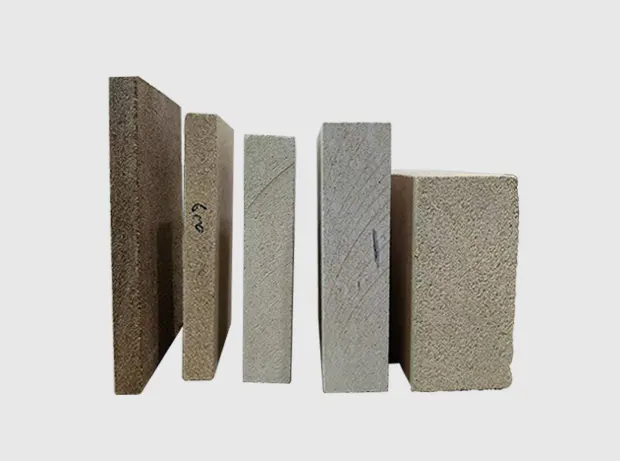
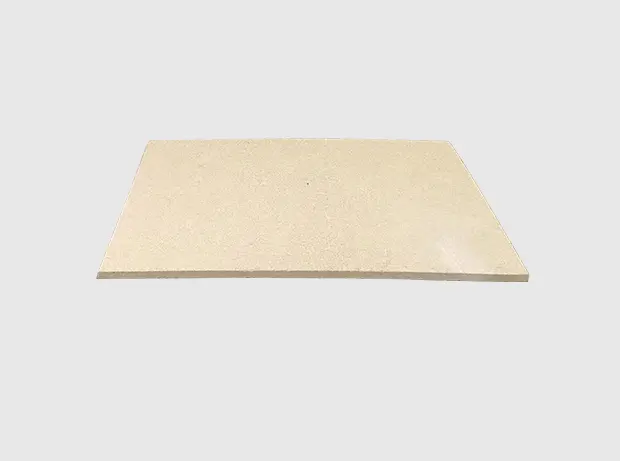
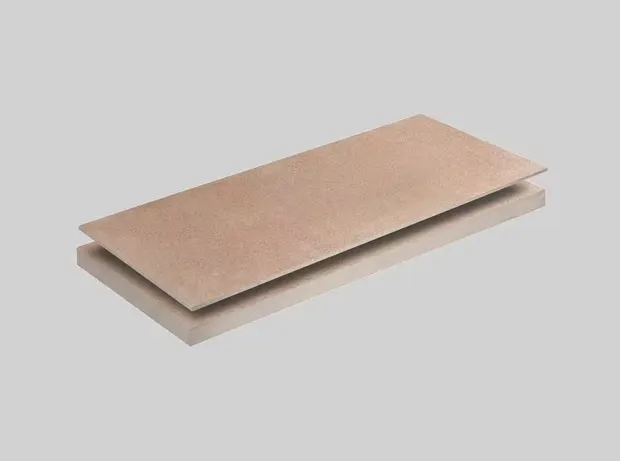
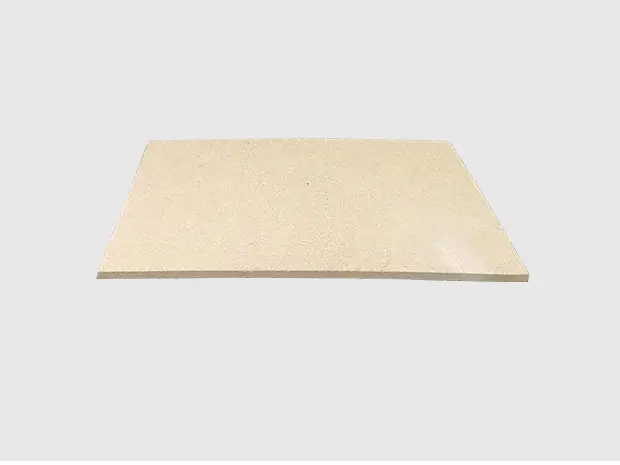
Shijiazhuang Chenxing Industrial Co., Ltd. has over 20 years of experience in vermiculite board production. Through independent research and development, we have created a new type of thermal insulation material: ceramic vermiculite board. These panels are manufactured by uniformly blending high-quality, high-temperature-expanded vermiculite, inorganic powders, and binders in precise proportions. The mixture is then molded under pressure, undergoes ambient curing, high-temperature drying, low-temperature conditioning, and final finishing through a series of production processes. Ceramic vermiculite boards offer excellent thermal insulation properties and are widely used in high-temperature facilities such as aluminum ducts, steel ducts, and boilers. Their density ranges from 1000 to 1300 kg/m³. Thicknesses ranging from 40 to 70 mm are available, with lengths and widths customizable to meet specific client requirements. Combining the advantages of ceramic and vermiculite boards, these panels exhibit high refractory and corrosion resistance alongside superior thermal insulation and mechanical strength. Consequently, they are extensively employed in the construction, chemical, and power industries for fabricating equipment and components operating in high-temperature, strong acid, and strong alkali environments.

Chenxing possesses extensive experience in vermiculite board production and robust R&D capabilities. Our ceramic vermiculite boards offer superior thermal insulation properties and resist powdering at high temperatures, making them ideal for applications in aluminum troughs, ladles, kilns, and similar environments. Ceramic vermiculite boards undergo testing at third-party authoritative inspection institutions. Testing adheres to national standards including GB/T5486-2008 “Test Methods for Inorganic Rigid Insulation Products,” YB/T2208-1998 “Test Method for High-Temperature Compressive Strength of Refractory Castables,” YB/T4130-2005 “Test Method for Thermal Conductivity of Refractory Materials,” and GB/T6900-2016 “Chemical Analysis Methods for Aluminosilicate Refractories.” All indicators met the design standards.