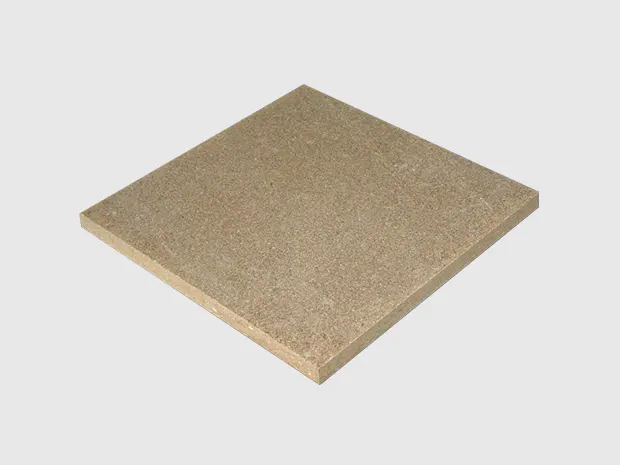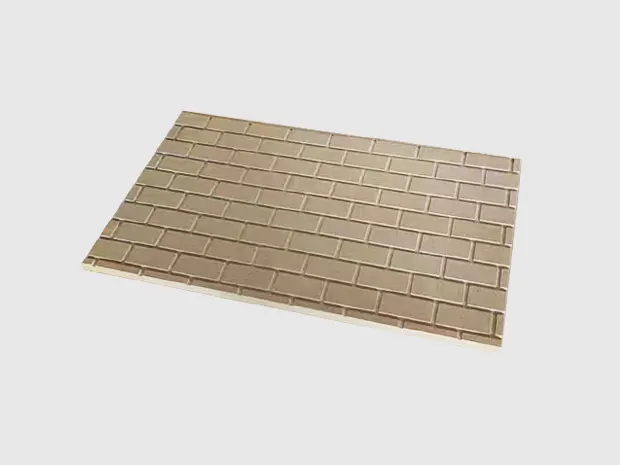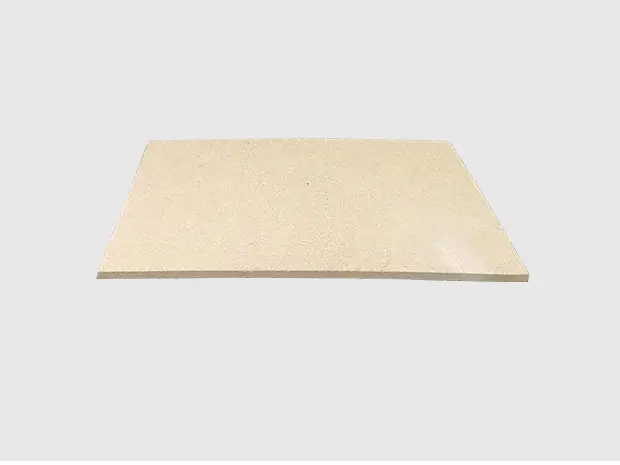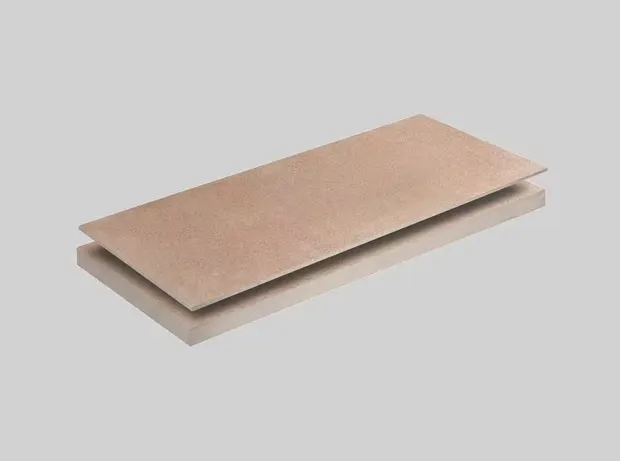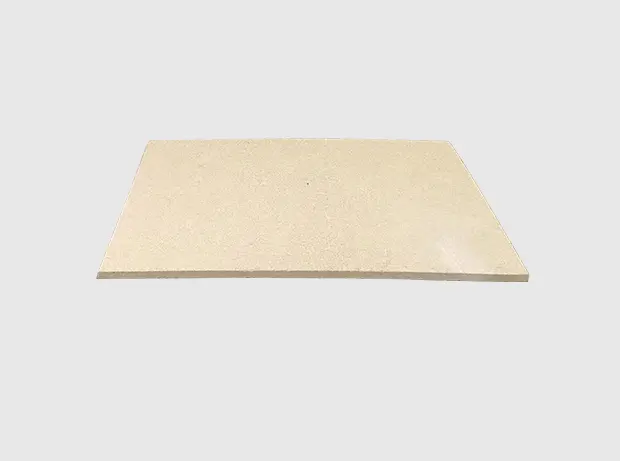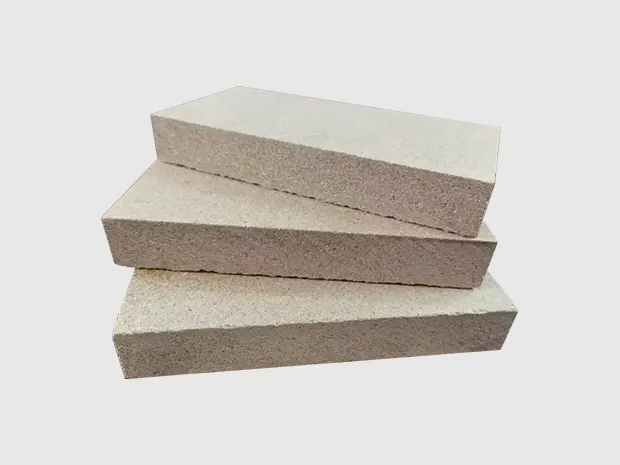
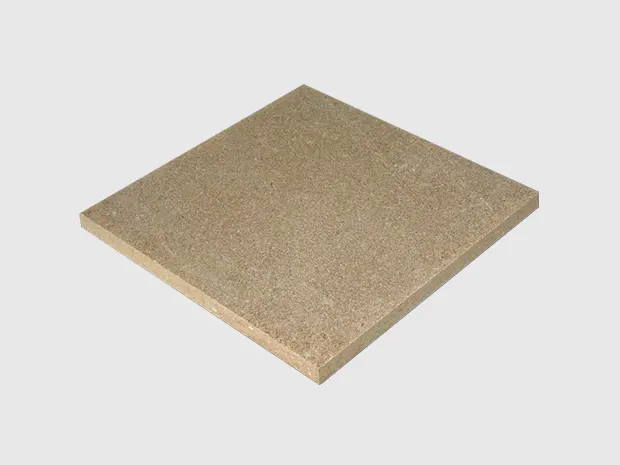
The primary specifications of currently produced vermiculite boards are:
maximum length 2440 mm,
maximum width 1220 mm,
thickness (8-65) mm,
density (450-1200) kg/m³.
Products can be manufactured to various specifications based on customer requirements.
Vermiculite board is manufactured by hot or cold pressing expanded vermiculite with a specific amount of binder, resulting in high strength and toughness. This board also features thermal insulation, heat resistance, fireproofing, and asbestos-free properties, while maintaining sufficient strength for cutting, slotting, and drilling. Even when heated to 1200°C, they emit no gases harmful to human health and achieve Class A fire rating. Applications include fire door cores, fireplace linings, and wall materials. Also known as expanded vermiculite boards.
Characteristics: Non-combustible, non-melting, high-temperature resistant. As vermiculite boards primarily use expanded vermiculite—an inorganic material devoid of carbon—they do not burn. Its melting point ranges from 1370 to 1400°C, with a maximum service temperature of 1200°C, and it offers enduring thermal insulation properties. As a novel building material, vermiculite board remains in its infancy in China, where raw vermiculite is primarily exported while finished products see limited domestic application. However, domestic market demand has gradually increased in recent years. In developed nations like the United States, United Kingdom, and France, vermiculite board has been widely used since the 1980s.
Parameters of Vermiculite Board:
Project Name
Vermiculite Board
Vermiculite Board
Vermiculite Board
Testing Conditions
Thicknesses(mm)
20±0.5
40±0.5
60±0.5
/
Densities(kg/cm3)
800±50
600±50
500±50
/
Refractory Temperature (℃)
1150~1250
1100~1200
1100~1200
/
Fire Rating
A1
A1
A1
/
Permanent linear change in heating
≤2
≤2
≤2
1100℃×12h
Normal temperature compressive strength (MPa)
4.9~5.9
3.73~4.73
3.76 ~4.76
Compressed 10%
Heat Conductivity W/(m·K)
0.120±0.003
0.107±0.003
0.100±0.003
Hot Side 200℃
0.140±0.003
0.127±0.003
0.120±0.003
Hot Side 400℃
0.160±0.003
0.147±0.003
0.140±0.003
Hot Side 600℃
0.180±0.003
0.167±0.003
0.160±0.003
Hot Side 800℃
Heat Loss (%)
<2
<3
<3
1050℃
colors
Golden Yellow/Silver White
Golden Yellow/Silver White
Golden Yellow/Silver White
/
Range of machinable specifications:
Densities:400-1000KG/M3
Thicknesses:10-60MM
Length Width:
It can be cut into various sizes within the range of 1200 * 2000mm according to customer needs.
Information can be provided:
SGS and other third-party authoritative test reports (physical, fire non-combustible A1, toxicity ZA2, fire integrity, thermal insulation, sound insulation, no heavy metals, no asbestos, no formaldehyde and other volatile organic compounds)
The primary specifications of currently produced vermiculite boards are: maximum length 2440 mm, maximum width 1220 mm, thickness (8-65) mm, and density (450-1200) kg/m³. Products can be manufactured to various specifications based on customer requirements.
The vermiculite produced by Chenxing Industry is made of high-quality Xinjiang asbestos free vermiculite, which is non-toxic, smoke-free, environmentally friendly, and inorganic materials without carbon and sulfur elements. It does not produce air pollutants such as CO2 and SO2 that affect the atmosphere, nor does it pose a threat to human health. Zhiban stone is widely used in fields such as construction, shipbuilding, metallurgy, electricity, aerospace, etc. abroad, with specific applications in:
1. Fire door cores;
2. High-end kitchenware and furniture;
3. Ship hull panels;
4. Fire escape routes and ventilation systems;
5. Commercial buildings, banks, libraries, hotels, restaurants, entertainment venues, luxury residences, and standard housing;
6. Kiln insulation;
7. Fireplace insulation;
8. Industrial insulation materials.